
Digital Lab: Features, Benefits, Components & Future Trends
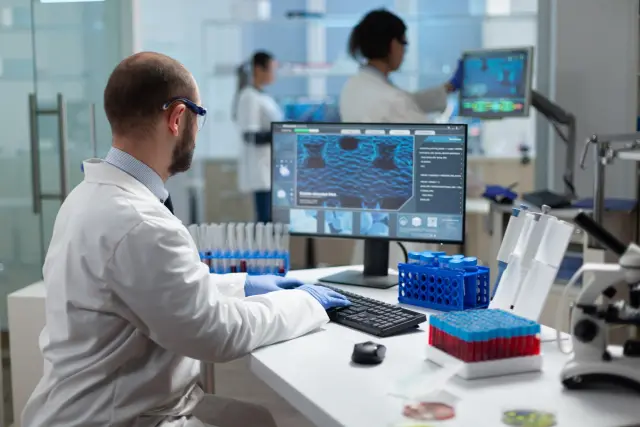
Introduction
A Digital Lab represents the transformation of traditional laboratory environments through integrated technologies, automation, data analytics, and cloud connectivity. These next-generation labs enhance accuracy, speed, collaboration, and compliance across scientific, industrial, and research workflows.
What Is a Digital Lab?
A digital lab is a technology-enabled laboratory ecosystem where instruments, software, sensors, and data systems interact seamlessly. It replaces manual processes with smart, automated, and data-driven solutions to improve operational efficiency and scientific outcomes.
Core Characteristics
- Automation-powered workflows
- Real-time data capture and visualization
- Centralized digital records
- Remote accessibility and device control
- Improved regulatory compliance and traceability
Key Components of a Digital Lab
1. Laboratory Information Management System (LIMS)
A LIMS helps manage samples, workflow automation, results, and documentation—ensuring complete traceability and structured data management.
2. Electronic Lab Notebook (ELN)
ELNs replace traditional notebooks with searchable, secure, and collaborative platforms for storing experimental data.
3. Laboratory Execution System (LES)
LES guides scientists through standardized protocols digitally, reducing human error and enhancing reproducibility.
4. Connected Instruments and IoT Devices
Smart devices help in:
- Continuous monitoring
- Automated data transfer
- Predictive maintenance
- Quality assurance
5. Cloud Computing and Data Storage
Cloud platforms store massive datasets while enabling:
- Remote access
- Team collaboration
- Scalable storage
- Secure backups
6. Advanced Analytics and AI
AI-driven analysis supports:
- Process optimization
- Predictive modeling
- Faster decision-making
- Enhanced pattern recognition in research data
Benefits of Implementing a Digital Lab
Enhanced Efficiency
Automation minimizes repetitive tasks, freeing scientists to focus on complex research activities.
Improved Data Integrity
Digital systems ensure consistent, validated, and tamper-proof data, reducing compliance issues.
Real-time Monitoring
IoT instrumentation enables live tracking of equipment performance, sample conditions, and experiment progress.
Cost Reduction
Automation and optimized workflows reduce labor, waste, and downtime caused by equipment failures.
Better Collaboration
Team members can access shared data remotely, accelerating project timelines and knowledge exchange.
Applications of Digital Labs Across Industries
Healthcare & Clinical Research
- Electronic patient data integration
- Faster diagnostic research
- Efficient trial documentation
Pharmaceuticals
- Digitized drug discovery workflow
- Automated quality control
- Regulatory documentation management
Biotechnology
- Genomic data analysis
- Smart culture monitoring
- Improved experiment reproducibility
Manufacturing & Quality Testing
- Material testing automation
- Predictive quality insights
- Streamlined compliance audits
Education & Virtual Learning
Digital labs also support remote learning through virtual experiments, simulations, and collaborative online platforms.
Building a Digital Lab: Step-by-Step Approach
Step 1: Assess Current Capabilities
Identify existing gaps, manual processes, and long-term goals.
Step 2: Choose the Right Digital Tools
Focus on:
- LIMS
- ELN
- Automation hardware
- Data integration systems
Step 3: Integrate Instrument Connectivity
Ensure instruments can communicate with software platforms through APIs or IoT gateways.
Step 4: Implement Cloud and Cybersecurity Measures
Adopt secure data protocols, multi-factor authentication, and encrypted cloud storage.
Step 5: Train Your Team
Provide training on digital tools, automation workflows, and compliance procedures.
Step 6: Scale and Optimize
Continuously analyze performance data to refine workflows and expand digital capabilities.
Challenges in Digital Lab Adoption
Data Migration Difficulties
Converting years of manual records into digital format requires time and strategic planning.
High Initial Investment
Although long-term savings are significant, early setup costs may be a barrier.
Compatibility Issues
Legacy equipment may lack digital connectivity, requiring integrations or upgrades.
Skill Gaps
Staff may need training to adapt to advanced digital tools.
Future Trends Shaping Digital Labs
AI-Driven Experimentation
AI will design, simulate, and optimize experiments before physical testing.
Fully Autonomous Laboratories
Robotics and automation will allow labs to operate with minimal human intervention.
Virtual and Augmented Reality
VR/AR will support remote experimentation, training, and immersive data analysis.
Blockchain Data Verification
Immutable data logs will enhance research credibility and compliance.
FAQs
1. What is the main purpose of a digital lab?
Its purpose is to improve efficiency, accuracy, and collaboration by digitizing and automating laboratory processes.
2. How does a digital lab differ from a traditional lab?
A digital lab uses integrated technology, automation, and cloud-based data systems, unlike traditional labs that rely on manual workflows and paper records.
3. What technologies are essential for building a digital lab?
Automation tools, LIMS, ELNs, IoT devices, cloud platforms, and AI-driven analytics.
4. Can small laboratories adopt digital lab systems?
Yes, scalable digital tools allow small labs to adopt solutions at their own pace.
5. How secure is data in a digital lab?
With encryption, cloud security protocols, and access controls, digital labs can be more secure than traditional setups.
6. Does a digital lab reduce operational costs?
Over time, reduced manual labor, minimized errors, and optimized workflows significantly lower costs.
7. What industries benefit the most from digital labs?
Pharmaceuticals, healthcare, biotechnology, manufacturing, and academic institutions benefit extensively from digital transformation.


