
The Benefits of Photo Editing Software for Modern Professional Photographers
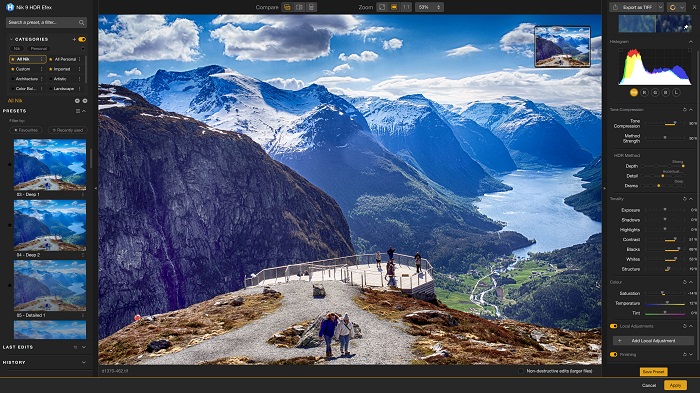
In the early days of digital photography, a lingering purist mentality suggested that true mastery belonged entirely behind the lens. The notion was simple: if a photographer properly calculated their exposure, balanced their lights, and framed the shot with discipline, the resulting frame should require zero digital intervention. Anyone relying on software was quietly suspected of compensating for sloppy camera craft.
That perspective has been thoroughly dismantled by the realities of modern commercial practice. Photography has always been a two-stage craft. The greatest analog masters, from Ansel Adams to Irving Penn, spent far more time manipulating contrast filters, dodging highlights, and formulating chemical baths in darkrooms than they did tripping the physical shutter. Modern photo editing software is not a cosmetic crutch designed to rescue defective exposures; it is the digital realization of the darkroom. For today’s working professionals, dedicated editing software serves as an indispensable creative and operational engine, transforming raw, uncompressed sensor data into polished, commercially viable visual art.
Maximizing the Latent Power of RAW Sensor Data
Modern professional camera sensors are marvels of optical engineering. High-resolution full-frame and medium-format sensors capture immense dynamic range across 14-bit and 16-bit architectures, recording millions of subtle tonal variations. However, when a camera captures a RAW file, it deliberately avoids baking in permanent contrast, saturation, or sharpening. The raw capture is intentionally flat, desaturated, and visually muted—a digital negative packed with unprocessed information.
Dedicated post-processing platforms provide the computational power required to decode and interpret this latent information:
-
Highlight and Shadow Recovery: Sensor capabilities allow photographers to recover dramatic shadow detail from high-contrast scenes without introducing muddy digital grain, or pull back bright sky textures that appear blown out on first glance.
-
Optical Defect Correction: High-end editing suites incorporate calibrated lens profiles that automatically eliminate chromatic aberration, reduce peripheral vignetting, and neutralize geometric barrel or pincushion distortion.
-
Sensor Noise Mitigation: Advanced demosaicing algorithms and machine-learning noise reduction tools preserve structural edge sharpness while cleanly removing luminance and chrominance noise generated in low-light environments.
Without dedicated editing software, a photographer abandons the true technical potential of their camera body. Harnessing these tools ensures that every ounce of optical performance purchased in expensive hardware actually makes it onto the screen or printed page.
Defining a Cohesive Visual Signature and Brand Identity
Technical competence is widespread in modern photography; sharp focus and clean exposures are table stakes. In an intensely competitive commercial market, what truly sets a working professional apart is an unmistakable, proprietary visual identity. Clients do not hire commercial, fashion, or wedding photographers simply because they own capable gear; they hire them for their distinct creative perspective.
Photo editing software is where that visual voice is calibrated and codified. Through precise adjustments to primary color channels, selective Hue-Saturation-Luminance (HSL) modules, and custom split-toning curves, a photographer establishes a signature aesthetic. Whether an artist is known for warm, cinematic shadow roll-offs, rich, desaturated editorial palettes, or luminous, high-key skin tones, these stylistic signatures are constructed deliberately in software.
Equally important is visual consistency across challenging shooting environments. A full-day commercial shoot or a twelve-hour wedding frequently takes place under wildly erratic lighting conditions—moving from harsh direct midday sun to tungsten-lit interiors and fluorescent banquet halls. Editing software empowers photographers to harmonize these disparate lighting temperatures, ensuring that skin tones, corporate branding colors, and environmental hues remain coherent from the first frame to the last.
Accelerating Commercial Turnarounds and Scaling Workflow
Artistic vision means very little if an independent business owner cannot meet deadlines. Professional photography is often an exercise in extreme volume. A wedding photographer routinely returns from a weekend with three thousand frames; an e-commerce catalog shooter might capture hundreds of apparel products across a single afternoon. Manually manipulating individual image files within basic consumer utilities would grind any commercial business to a halt.
Professional post-processing suites are engineered around high-velocity, non-destructive workflows:
Batch Processing and Parametric Editing
Non-destructive parametric software does not alter the underlying source pixels. Instead, it writes lightweight instructions to database catalogs or metadata sidecar files. This architecture allows an editor to calibrate color, exposure, and lens corrections on one hero image, and then instantaneously synchronize those exact parameters across hundreds of neighboring frames captured under identical lighting.
Tethered Shooting and On-Set Client Collaboration
In commercial and editorial studios, editing software acts as an active communication hub during production. Tethering a camera directly to a workstation running professional capture software enables images to render instantly on a calibrated display within seconds of shutter release. Art directors, stylists, and corporate clients can review framing, check critical focus at one hundred percent magnification, and evaluate real-time color grading while the set is still active, eliminating expensive re-shoots before they happen.
Surgical Precision with Advanced Masking and Retouching
While global adjustments set the baseline tone, fine-art and commercial photography demand localized control. Contemporary photo editing software has evolved far beyond basic radial gradients, incorporating neural masking that isolates subjects, backgrounds, skies, and skin surfaces with pixel-level accuracy.
Maintaining Authenticity in Commercial Retouching
In fashion, portraiture, and beauty campaigns, the difference between amateur editing and master craftsmanship lies in texture preservation. Heavy-handed filtering blurs facial surfaces into an artificial, plastic sheen that repels modern viewers.
Professional editors rely on advanced software techniques such as frequency separation, which divides the visual data of an image into two distinct computational layers: high-frequency texture (fine skin pores, hair strands, fabric weaves) and low-frequency tonality (broad color transitions and shadow gradients). This separation allows an artist to smooth out uneven blotchiness or remove temporary blemishes without flattening the microscopic textures that make human skin look tangible, authentic, and high-end.
Color Management Across Print and Digital Delivery
A finished digital file rarely exists in a single medium. An advertising campaign might run as a full-bleed spread in a print magazine, appear on a four-story outdoor billboard, and populate high-density mobile displays simultaneously. Each destination medium operates under entirely different color spaces and dynamic boundaries.
Professional editing suites provide robust soft proofing engines that simulate destination environments before a file is exported:
-
ICC Profile Simulation: Photographers can preview exactly how their colors will compress when shifted from a broad working space like Adobe RGB into CMYK print standards or web-standard sRGB.
-
Targeted Output Sharpening: Software applies specialized sharpening algorithms designed specifically to counter ink bleed and dot gain on porous paper, or optimize edge contrast for compressed web viewing.
-
Clipping Alerts: Real-time gamut warnings flag specific hues that sit outside the reproducible limits of the target output, allowing the photographer to manually compress saturated tones rather than leaving that translation to an automated, unpredictable printing algorithm.
An Essential Partner to the Lens
Photo editing software is neither an afterthought nor an emergency repair kit. It is the vital bridge connecting raw optical physics to intentional visual storytelling. By extracting the full dynamic capability of advanced camera sensors, providing the tools to forge an enduring personal style, accelerating production throughput, and safeguarding color integrity across diverse media, post-processing platforms have become an inseparable part of modern photographic mastery. Mastering software does not replace the craft of holding a camera; it completes it, giving dedicated photographers the creative freedom to bring their sharpest visions fully to life.


